
Shaping the Future Together: A Deep-Tech Corridor Between Luxembourg and Tsukuba
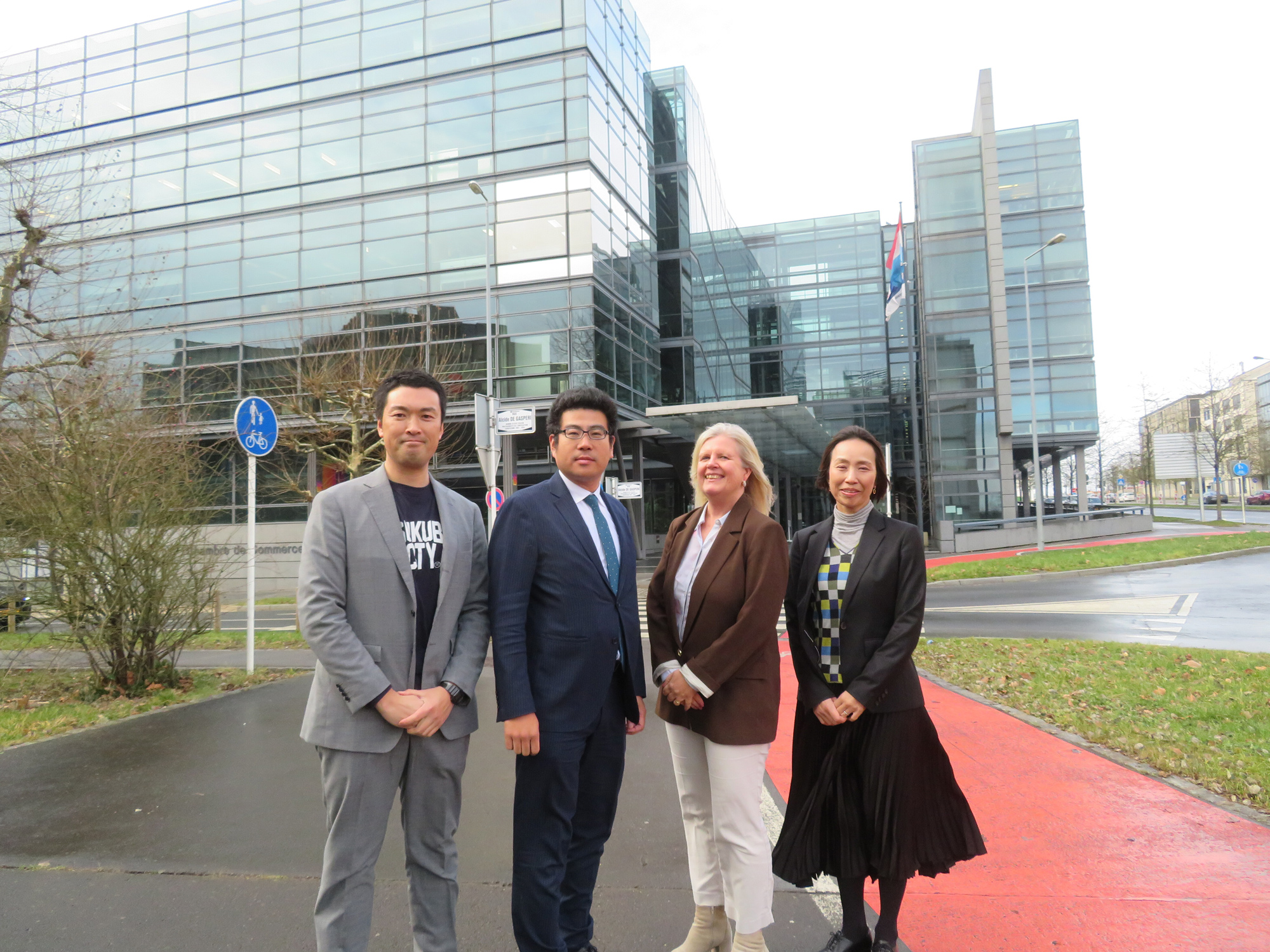
LuxinnovationJenny Hällen Hedberg (Head of international relations)
Jenny Hällen Hedberg currently has the role of Head of international relations at Luxinnovation, the national innovation agency of Luxembourg. She leads international relations especially with a view of attracting more tech companies to Luxembourg. She is a director with a demonstrated history of top management in the higher education/research industry as well as leadership experience in companies. Jenny has experience in international relations, global engagement and representation; international education, institutional partnerships, business partnerships, ranking, reputation-building and student mobility. She has experience in leading large high performing teams, managing vast budgets, off-shore offices, and has had oversight of a range of diverse portfolios from PR, marketing and communications, transnational education, student exchange, alumni, scholarships to creation of strategic partnerships with industry, ministries, embassies and high-level policy collaborations. She has previously held top level positions at Lund University, The University of Luxembourg, Nanyang technological university in Singapore, the European Court of Auditors etc.
Luxembourg Trade and Investment Office, TokyoYuriko Matsuno (Exective Director)
Yuriko Matsuno leads efforts to promote trade and investment between Japan and Luxembourg at the Luxembourg Trade and Investment Office in Tokyo. She joined the Embassy of Luxembourg in Japan in 1996 and has served as Executive Director of LTIO since 2005. Matsuno has supported over 60 Japanese startups’ participation in Luxembourg tech events. She promotes Japanese direct investment into Luxembourg and supports Luxembourg companies’ attempt to develop the Japanese market. Previously, she worked in PR and marketing for international firms before becoming an independent consultant.
Tsukuba City Government Startup Promotion OfficeTomoyuki YASHIRO (Director)
Professional Background: Over 18 years of experience in public policy and urban management. Joined Tsukuba City Hall in 2006 after working in private sector research. Government Strategy: Served two years at the Ministry of Economy, Trade and Industry (METI). Currently leading Tsukuba’s startup support initiatives (7th year), reporting directly to the Mayor. Innovation & Ecosystem Building: NEDO-SSA Associate: Specialist in technology commercialization (certified by Japan’s national R&D agency). Mentor, TX Entrepreneur Partners: Supporting deep-tech startups. Core Member, Impact Consortium: Driving national-level public-private partnership policies under METI. Education: Graduate of the Platinum Concept School (1st Cohort).
*This article treats startups and ventures as synonyms.
Shaping the Future Together
Tsukuba, Japan’s premier “Science City,” and Luxembourg, a leading hub for European innovation. Though geographically distant, these two powerhouses are now being linked by a single “Deep-Tech Corridor.”
The strategic partnership between Tsukuba City and Luxinnovation, Luxembourg’s national innovation agency, is far more than a formal administrative agreement. It serves as a robust bridge designed to empower startups in fields that shape our collective future—such as space, life sciences, and sustainability—to scale across borders and tackle global challenges.
In this article, we explore how Luxembourg serves as the ideal gateway for European expansion and the immense possibilities this deep-rooted trust offers to Japanese entrepreneurs. Through our exclusive interview with Luxinnovation, we reveal the vision of a collaborative ecosystem destined to change the world.
Japanese article : https://tsukuba-startup-journey.jp/interview/2026-march/
I. The Gateway Concept
Mr. Yashiro
Ms. Hedberg
Welcome to Luxembourg. Tsukuba City is a very important partner to us. We hope that the startups in Tsukuba will get to know more about Luxembourg.
Ms. Matsuno
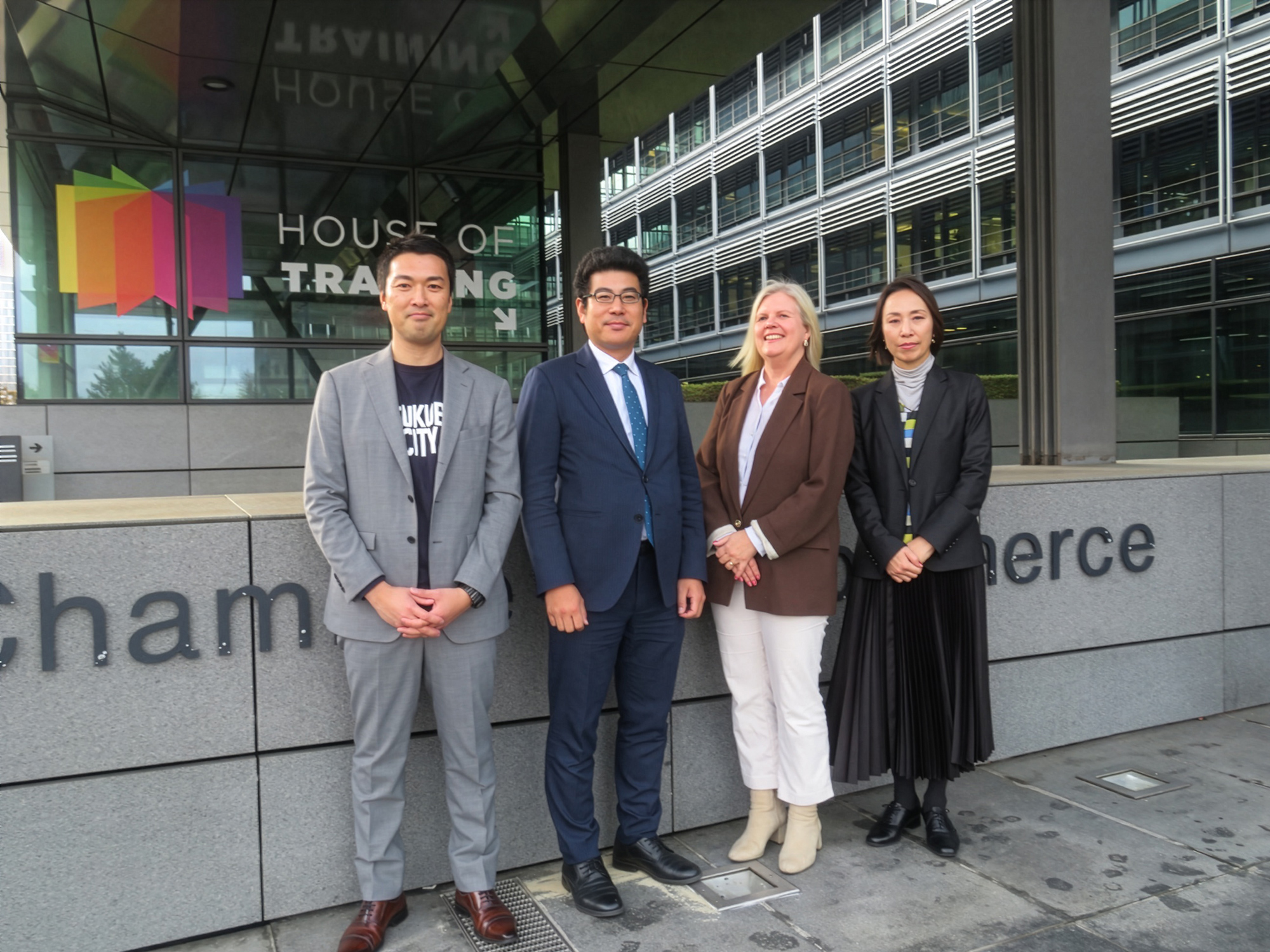
At long last, we were able to show Director Yashiro and General Manager Takahashi around Luxembourg. We had been eagerly awaiting their visit. On behalf of the Luxembourg Trade and Investment Office, we would like to extend a warm welcome to both of them.
Mr. Yashiro
Why Luxembourg is the “Smart Hub” for Europe. The agility and accessibility of its ecosystem.
Readers recognize Luxembourg as the first-choice destination for EU expansion.
The “Pro-Business” Spirit: Luxembourg is often described as one of the most pro-business environments in Europe. From your perspective, what is the single most important factor that makes this country so welcoming for foreign entrepreneurs?
Ms. Hedberg
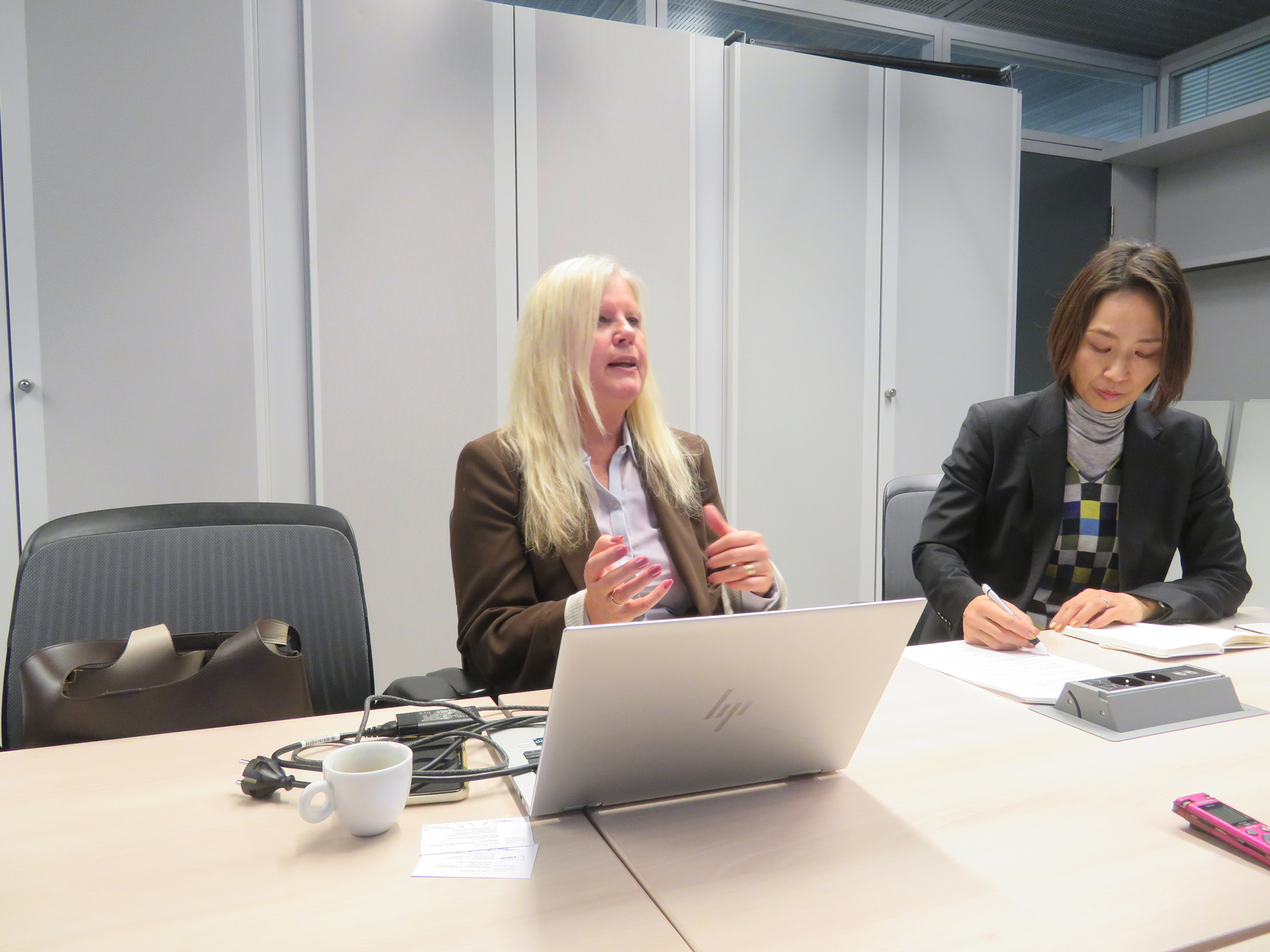
Thank you for this interesting question. Luxembourg stands out primarily due to its strategic geographical location. We are situated between two major economies, France and Germany, providing a perfect hub for business.
A key advantage for Japanese companies is that you can conduct all business operations in English. Our workforce is highly international; local employees typically speak multiple languages, including French and German, which facilitates easy access to neighboring markets. Furthermore, our support services through Luxinnovation and the Chamber of Commerce are free of charge, especially for Tsukuba-based companies under our current agreement.
Ms.Matsuno
To add to that, the Luxembourg government acts as a pragmatic platform for international companies. Our approach is business-friendly—facilitating growth rather than imposing heavy controls. We also adopt EU regulations in the “lightest” possible format to minimize the administrative burden on foreign entrepreneurs.
Mr. Yashiro
That’s certainly true. Based on my own personal impression, I feel that Germany and France possess significant national power within the EU. I think everyone would agree with that. The excellent geographical access to those countries is a major advantage, and since they’re part of the Schengen Area, the ease of travel is also a big draw. Being able to experience firsthand in Luxembourg how well the EU functions was a valuable experience. However, I don’t think the same can be said for other countries in the Schengen Area. I completely understand why Luxembourg is called the gateway to Europe.
In fact, major Japanese companies have established their European headquarters in Luxembourg, haven’t they?
Ms. Matsuno
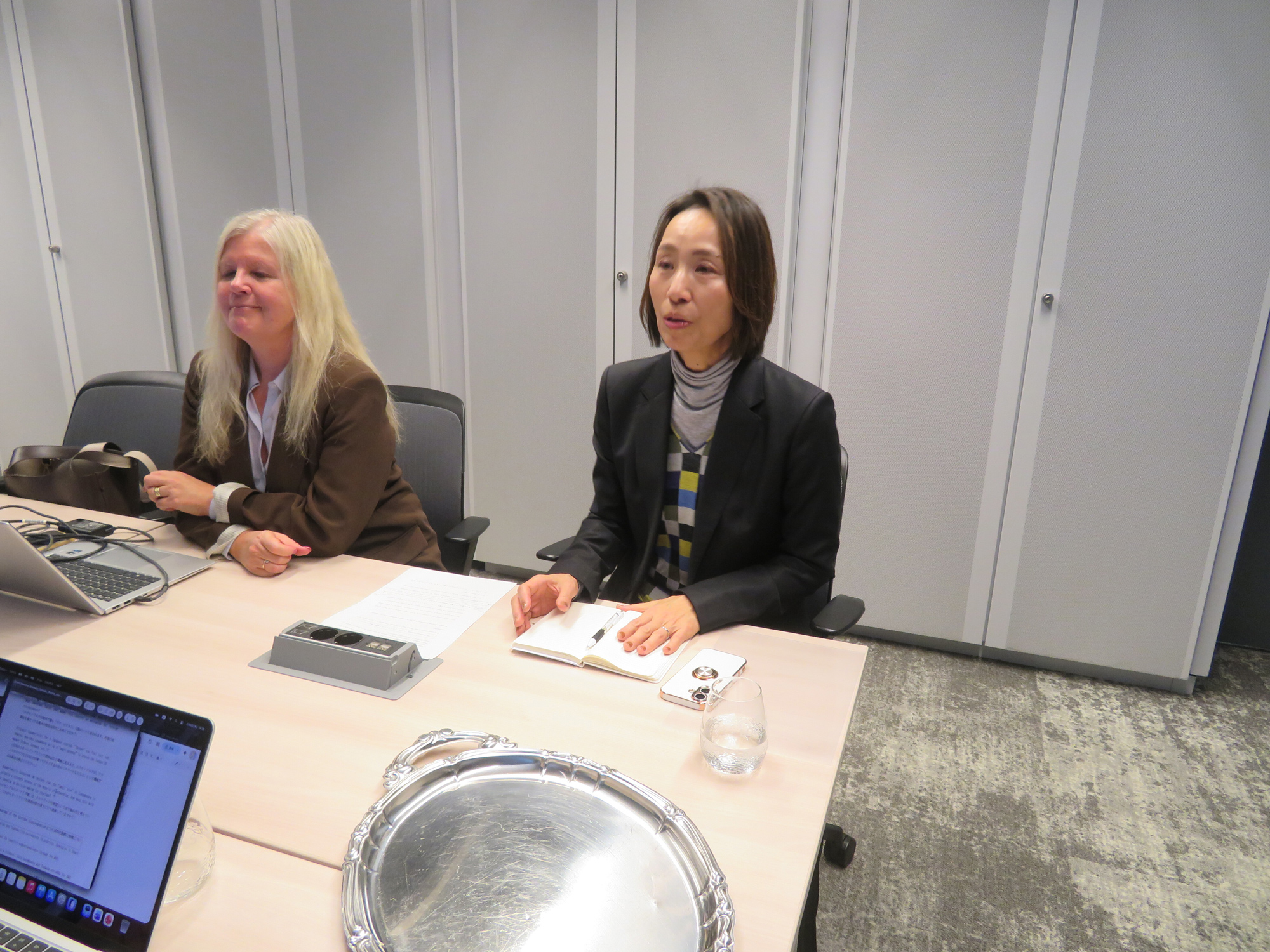
As you mentioned, companies representing various sectors from Japan have established a presence in Luxembourg. As a European hub for international finance, Luxembourg is home to financial institutions such as Mitsubishi UFJ, Nomura, Sumitomo Mitsui, and Tokio Marine. In addition, technology companies like Fanuc, Rakuten, Fujitsu, and NTT, as well as the space startup “ispace, inc.”, are also expanding their European operations in Luxembourg.
Mr. Yashiro
Companies that expand into Luxembourg do so to grow their own businesses, but what benefits does this bring to local Luxembourg companies?
Ms. Hedberg
This is a vital point. Luxembourg has a strong history in manufacturing and steel. Today, our role at Luxinnovation is to help these large, traditional corporations become more innovative. These established companies often look to startups to acquire new knowledge and speed up innovation. By matching incoming startups with our traditional enterprises, we create a dynamic ecosystem that benefits both parties.
Mr. Yashiro
I believe that Tsukuba’s technology would be of great benefit to traditional large companies in Luxembourg and across Europe. Could you please share any key points to consider when matching Tsukuba startups with Luxembourg-based companies?
Ms. Hedberg
My advice would be to consult with the business developers in our team in Luxinnovation. They can guide Japanese companies as to which expertise we are looking for in Luxembourg and Europe. They also have entry points into the larger companies in Luxembourg. Basically, everything deeptech is interesting for us; digital appliances, sustainable manufacturing, everything related to automotive, space and defense, AI, quantum, robotics, sensing etc.
II. The Anatomy of the Corridor
Mr. Yashiro
Tsukuba and Luxembourg share the common feature of having many academic institutions. What kind of value do you think will be created through collaboration between Tsukuba and Luxembourg in the field of high-level technology?
Ms. Hedberg
Tsukuba is clearly a leader in this field, with a vast university landscape and long-standing expertise in R&D. While our deep tech ecosystem is younger, the Luxembourg government is now pushing extensively in this area through funding and specialized incubators like Technoport.
We see great potential for research collaboration between Tsukuba’s companies and our institutes, such as LIST (Luxembourg Institute of Science and Technology). Specifically, we have built a strong “Cornerstone” in the space sector over the last 20 years, and we are now moving full force into Cybersecurity and Quantum technology. We are very happy to partner with Tsukuba because of your deep expertise in these fields.
Mr. Yashiro
Indeed, what Luxembourg has that Tsukuba lacks is support from a “business perspective.” Support organizations like Technoport, its role as a financial hub, and the concentration of major corporations are all attractive to startups in Tsukuba as well. We are delighted to see this collaboration moving forward.
III. A Shared Vision for 2030
Mr. Yashiro
Long-term commitment to solving global issues. Mutual expectations for cross-border success stories.
Readers feel a sense of security and excitement about the partnership’s future.
The 5-Year Roadmap: In the next five years, what kind of concrete achievements (e.g., joint projects, successful scale-ups) do you hope to see through this collaboration?
Ms. Hedberg
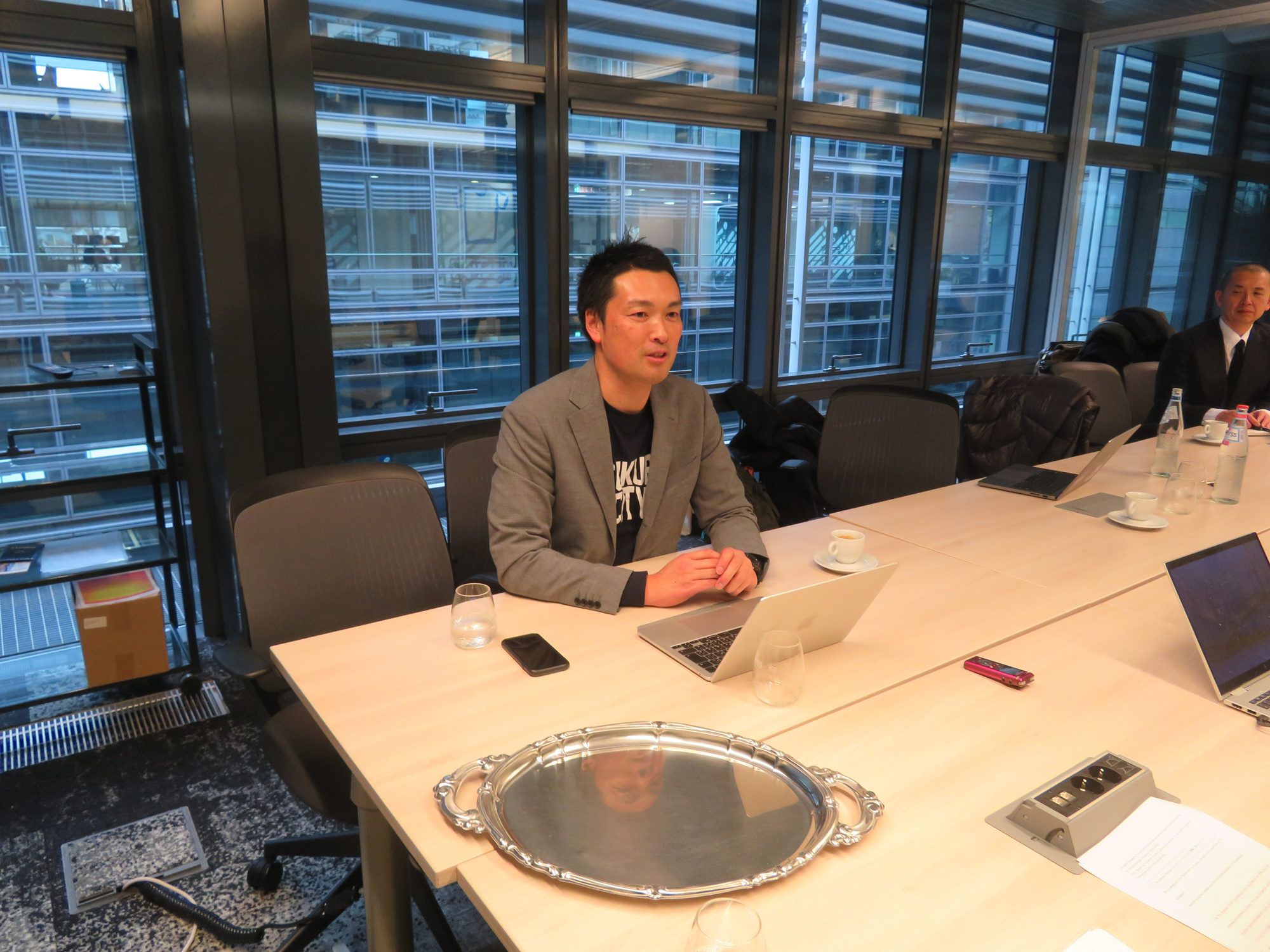
Our CEO is very focused on this relationship and is ready to support larger-scale projects. I believe we should work together to create a “targeted” project between our regions—perhaps a “Startup in Residence” program or dedicated spots in our incubators for Tsukuba startups.
If we can create a successful, branded project—similar to our “Fit 4 Start” program—it could serve as a role model for international partnerships. Our ultimate goal is for the startups to profit, grow, and find partners and clients through this exchange.
Mr. Yashiro
That’s right. We are currently sending startups to Luxembourg through the JETRO program. While this is a very short-term initiative, I believe it would be desirable to consider establishing a medium- to long-term framework in the future. In that case, I believe the most effective approach would be to build on the “Fit 4 Start” program, through which startups from Tsukuba have been selected in the past. We believe that the companies supported by Tsukuba City are well-suited for this global selection process.
In any case, startups based on basic research take many years to become stable as companies. Let’s work together with a medium- to long-term perspective, rather than a short-term one!
P.F. Drucker, a renowned management theorist, states that those who succeed in innovation are not “risk-oriented” but “opportunity-oriented.” We view risk as “uncertainty.” We believe that by creating opportunities and clarifying uncertainty, the likelihood of innovation increases.
The “opportunity-oriented” mindset Drucker describes is nothing less than an attitude of embracing change and proactively shaping the future. However, venturing into unknown markets can sometimes be a lonely and arduous journey. That is precisely why we have built this “Deep Tech Corridor”—a reliable path forward.
Here, you will find a partner with whom you can walk toward an uncertain tomorrow with excitement.
Challenge. Grow. Go Global.
This is the “Tsukuba Startup Journey.”
You don’t have to build the future alone. We are here.
Thank you very much for kindly hosting our business trip to Luxembourg. Since Tsukuba City and LUXINNOVATION signed a Memorandum of Cooperation (MoC) on startup support on December 2, 2022, we have swiftly implemented collaborative initiatives, including visits by startups from both sides and the visit to Tsukuba by His Royal Highness Prince Guillaume in 2024.
These outstanding results were made possible thanks to the support of everyone in Luxembourg, led by Ms. Hedberg, as well as the staff at the Luxembourg Trade and Investment Office in Tokyo, led by Ms. Matsuno.
Ms. Hedberg has visited Tsukuba before. While Mayor Igarashi was invited to ICT SPRING (now NEXUS) in 2023 on behalf of Tsukuba City, I, as the head of startup support, had never been to Luxembourg.
While I am familiar with Luxembourg’s business strengths from various sources, I am gaining a much deeper understanding by experiencing it firsthand here.
The purpose of this interview is to help startups in Tsukuba and Tokyo gain a deeper understanding of Luxembourg.
I’m really looking forward to talking with both of you.